Lighting plays a powerful role in shaping how a bathroom looks, feels, and functions. While many homeowners focus heavily on tile, fixtures, and cabinetry during renovations, lighting often determines whether the space feels relaxing, practical, modern, or cramped. The right lighting strategy can turn an ordinary bathroom into a comfortable retreat that supports daily routines and enhances overall home value.
Understanding how lighting influences mood, usability, and spatial perception helps homeowners make smarter remodeling decisions that improve both appearance and functionality.
Why Bathroom Lighting Matters More Than Most People Expect
Bathrooms serve multiple purposes throughout the day. They function as grooming areas, relaxation zones, and sometimes even quiet personal retreats. Lighting must support each of these activities effectively.
Poor lighting can make even a beautifully designed bathroom feel uncomfortable or impractical. In contrast, well-planned illumination improves visibility, enhances finishes, and creates a balanced atmosphere.
Effective bathroom lighting contributes to:
- Clear visibility for grooming tasks
- Reduced shadows around mirrors
- A calm and welcoming environment
- Enhanced perception of cleanliness
- Increased resale appeal
Lighting decisions influence not only how the bathroom looks but also how people experience it daily.
Understanding the Three Essential Types of Bathroom Lighting
A well-lit bathroom relies on a layered lighting approach rather than a single overhead fixture. Each lighting layer serves a different purpose.
Ambient Lighting Creates the Foundation
Ambient lighting provides general illumination across the entire bathroom. It ensures safe movement and overall visibility throughout the space.
Common ambient lighting choices include:
- Ceiling-mounted fixtures
- Recessed lighting
- Flush-mount lights
- LED panel lights
Balanced ambient lighting prevents dark corners and creates a consistent visual base for the rest of the lighting design.
Task Lighting Supports Daily Routines
Task lighting focuses on areas where precision matters most, especially around mirrors and vanities.
Examples of effective task lighting include:
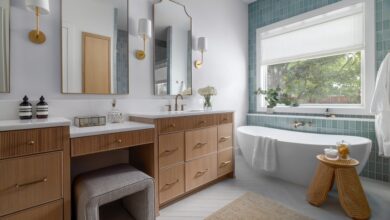
- Vertical wall sconces beside mirrors
- Backlit mirrors
- Adjustable vanity lighting
- Under-cabinet lighting
Proper task lighting reduces shadows on the face and improves accuracy when shaving, applying makeup, or grooming.
Accent Lighting Adds Depth and Style
Accent lighting highlights architectural features and decorative elements. While not essential for functionality, it dramatically enhances atmosphere.
Accent lighting options include:
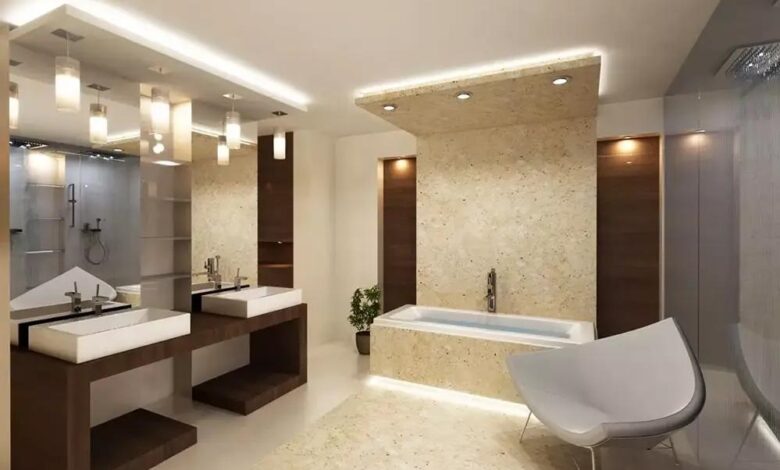
- Toe-kick lighting under vanities
- LED strips inside niches
- Cove lighting along ceilings
- Decorative pendant lighting
These subtle additions create a layered visual effect that makes the bathroom feel more refined and inviting.
How Lighting Influences Bathroom Mood and Comfort
Lighting directly affects emotional response. Bright white lighting supports productivity and clarity, while warmer tones encourage relaxation.
For example:
- Cool white lighting improves morning alertness
- Warm lighting promotes evening relaxation
- Soft indirect lighting reduces visual stress
- Balanced lighting creates a calm environment
Bathrooms designed with mood-sensitive lighting feel more comfortable and adaptable throughout the day.
Installing dimmer switches allows homeowners to adjust brightness levels depending on time of day or activity.
Mirror Lighting Makes or Breaks the Bathroom Experience
Mirror lighting is one of the most important yet frequently overlooked design elements in bathrooms.
Overhead-only lighting often creates shadows beneath the eyes and chin, making grooming difficult. Side-mounted or integrated mirror lighting provides more even facial illumination.
Ideal mirror lighting should:
- Be positioned at eye level
- Provide even coverage across the face
- Avoid harsh glare
- Match the room’s color temperature
Backlit mirrors are increasingly popular because they combine function and style while reducing visual clutter.
Lighting Can Make Small Bathrooms Feel Larger
Lighting has a significant impact on spatial perception. Even compact bathrooms can feel open and airy with the right lighting strategy.
Techniques that visually expand small bathrooms include:
- Installing recessed ceiling lights instead of bulky fixtures
- Using large mirrors with integrated lighting
- Adding vertical wall lighting
- Choosing light-colored bulbs with balanced brightness
- Illuminating corners to reduce shadows
When light reaches every surface evenly, the bathroom appears larger than its actual dimensions.
The Role of Color Temperature in Bathroom Atmosphere
Color temperature refers to whether light appears warm, neutral, or cool. Choosing the right tone changes how materials and finishes look inside the bathroom.
Common bathroom lighting color ranges include:
- Warm white lighting for relaxation
- Neutral white lighting for balanced visibility
- Cool white lighting for grooming accuracy
Neutral white lighting often works best for vanity areas because it reflects natural skin tones accurately.
Combining multiple color temperatures within different zones creates a flexible and comfortable lighting environment.
Natural Light Enhances Bathroom Atmosphere Instantly
Natural light remains one of the most valuable design features in any bathroom. It improves mood, reduces reliance on artificial lighting, and enhances visual clarity.
Ways to increase natural light include:
- Installing larger windows
- Adding skylights
- Using frosted glass panels
- Selecting reflective surfaces
- Choosing light-colored finishes
Even small increases in daylight exposure can transform the overall atmosphere of the bathroom.
Lighting Highlights Materials and Finishes
Tile texture, countertop surfaces, fixtures, and cabinetry details become more noticeable under well-positioned lighting.
Strategic lighting placement can:
- Emphasize tile patterns
- Showcase stone countertops
- Highlight wall niches
- Add dimension to textured walls
- Reflect shine from chrome or brushed metal finishes
Without proper lighting, expensive materials may lose their visual impact.
Energy Efficient Lighting Improves Long Term Performance
Modern bathroom lighting solutions prioritize both performance and efficiency.
LED lighting offers several advantages:
- Lower electricity consumption
- Longer lifespan
- Reduced heat output
- Flexible brightness levels
- Compact installation options
Switching to energy-efficient fixtures improves sustainability while lowering long-term operating costs.
Layered Lighting Supports Safety and Accessibility
Bathroom safety improves significantly with thoughtful lighting placement.
Strategic lighting reduces risks such as:
- Slips near showers
- Trips during nighttime use
- Poor visibility on wet floors
- Shadowed corners near storage areas
Adding night lighting or motion-activated fixtures improves safety without disturbing sleep routines.
Accessibility-friendly lighting benefits households of all ages and abilities.
Smart Lighting Technology Elevates Bathroom Experience
Smart lighting systems allow homeowners to control brightness, color temperature, and timing automatically.
Popular smart lighting features include:
- Voice-controlled adjustments
- Scheduled lighting changes
- Motion sensors
- Scene presets for morning and evening routines
- Remote control through mobile devices
These upgrades increase both convenience and personalization.
Smart lighting transforms bathrooms into adaptable spaces that respond to changing needs throughout the day.
Lighting Placement Affects Daily Routine Efficiency
Lighting positioned correctly supports smoother movement through everyday tasks.
Effective placement strategies include:
- Ceiling lighting centered over walkways
- Side-mounted mirror lighting for grooming
- Shower lighting rated for moisture exposure
- Under-cabinet lighting for storage visibility
Thoughtful placement ensures the bathroom supports both speed and comfort during busy mornings and relaxed evenings.
Decorative Fixtures Add Personality Without Overpowering the Space
Decorative lighting enhances atmosphere while reinforcing design style.
Examples include:
- Pendant lighting over vanities
- Statement ceiling fixtures
- Minimalist sconces
- Backlit shelving displays
When used carefully, decorative fixtures provide character without sacrificing function.
Balancing decorative lighting with task and ambient lighting ensures visual harmony.
FAQ Section
What is the ideal brightness level for bathroom lighting
Most bathrooms perform best with layered lighting that produces between 1500 and 4000 lumens depending on size and layout.
Are LED mirrors better than traditional vanity lights
LED mirrors provide even facial illumination and reduce shadows, making them a practical and modern alternative to traditional vanity fixtures.
Can lighting affect how bathroom colors appear
Yes lighting changes how paint, tile, and finishes look because color temperature influences visual perception.
Should shower areas have separate lighting fixtures
Showers benefit from dedicated moisture-rated lighting to improve visibility and safety during use.
Is recessed lighting enough for a bathroom by itself
Recessed lighting works well as ambient lighting but should be combined with task lighting around mirrors for best results.
How do dimmer switches improve bathroom lighting
Dimmer switches allow brightness adjustment for different activities such as grooming, cleaning, or relaxing.
What lighting works best for bathrooms without windows
Bathrooms without windows benefit from layered LED lighting combined with neutral color temperature bulbs to simulate natural daylight conditions.