Furnishing a compact room requires more than simply selecting smaller pieces. It involves thoughtful planning, smart scaling, multifunctional design choices, and a clear understanding of how furniture affects movement, storage, and visual balance. When chosen carefully, the right furniture can make a small room feel open, efficient, and comfortable rather than crowded or restrictive.
Whether working with a small bedroom, studio apartment, guest room, or compact living area, selecting furniture strategically helps maximize every square foot while maintaining style and functionality.
Why Furniture Selection Matters More in Compact Rooms
In larger rooms, furniture placement mistakes are often easier to correct or hide. In smaller spaces, however, every decision affects usability and comfort.
Poor furniture choices can:
- Restrict movement
- Reduce storage opportunities
- Block natural light
- Make ceilings feel lower
- Create visual clutter
The right furniture improves circulation, enhances organization, and creates the illusion of more space.
Start With Accurate Measurements Before Buying Anything
One of the most common mistakes in compact rooms is purchasing furniture without measuring the available space properly.
Before selecting furniture:
- Measure wall lengths
- Note ceiling height
- Identify door swing clearance
- Record window placement
- Map walking pathways
Sketching a simple layout helps avoid overcrowding and ensures each piece serves a purpose without overwhelming the room.
Compact spaces benefit most from intentional planning rather than spontaneous decorating decisions.
Choose Furniture With Slim Profiles
Furniture with lighter proportions visually opens a room and prevents the space from feeling compressed.
Look for pieces that feature:
- Narrow arms on sofas
- Raised legs instead of bulky bases
- Open-frame structures
- Minimal ornamentation
- Streamlined silhouettes
Slim-profile furniture allows light to travel freely through the room, creating a sense of openness even when space is limited.
Prioritize Multifunctional Furniture Pieces
Multifunctional furniture is essential in compact rooms because it allows one piece to serve multiple purposes.
Effective space-saving furniture includes:
- Sofa beds for guests
- Storage ottomans
- Expandable dining tables
- Wall-mounted desks
- Beds with built-in drawers
Each multifunctional piece reduces clutter while increasing usability.
Investing in furniture that adapts to changing needs makes compact rooms more flexible and comfortable over time.
Select Light Colored Furniture to Expand Visual Space
Color plays an important role in how spacious a room feels. Lighter furniture reflects more light and helps surfaces blend rather than dominate.
Recommended furniture colors include:
- Soft white
- Warm beige
- Light gray
- Pale wood finishes
- Muted pastels
These tones create continuity between walls and furnishings, making rooms feel larger than they actually are.
Darker furniture can still work effectively when balanced with lighter surroundings and adequate lighting.
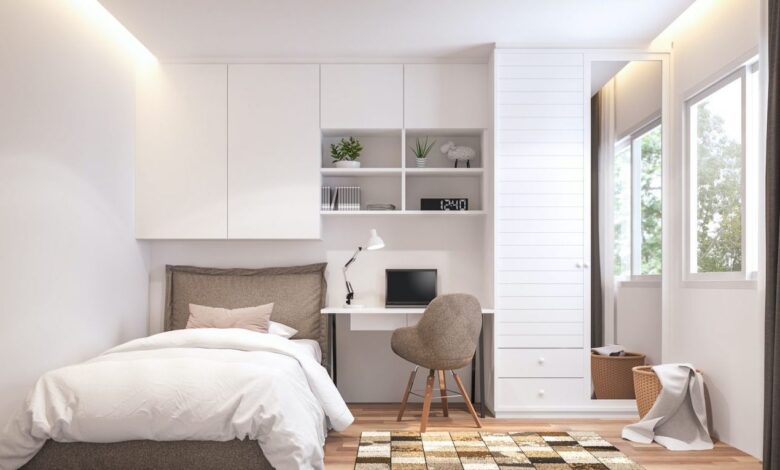
Use Vertical Space Instead of Floor Space
In compact rooms, vertical storage becomes more valuable than horizontal storage.
Consider installing:
- Tall bookcases
- Wall-mounted cabinets
- Floating shelves
- Vertical wardrobes
- Hanging organizers
Using vertical surfaces frees floor space and keeps the room visually organized.
Furniture that reaches upward rather than outward improves storage capacity without shrinking walking areas.
Choose Furniture With Built-In Storage
Hidden storage solutions help maintain clean surfaces and reduce visual clutter.
Examples of built-in storage furniture include:
- Platform beds with drawers
- Lift-top coffee tables
- Benches with storage compartments
- Nightstands with shelves
- Media consoles with concealed cabinets
When storage is integrated into furniture design, rooms stay organized without needing extra shelving units.
Avoid Oversized Statement Pieces
Large furniture can dominate a compact room and disrupt balance.
Instead of oversized items:
- Select apartment-scale sofas
- Choose compact dining tables
- Use narrow consoles instead of deep cabinets
- Replace bulky recliners with streamlined chairs
Proportion matters more than quantity in small spaces.
Even one oversized piece can make the entire room feel crowded.
Choose Furniture With Visible Legs
Furniture that sits directly on the floor creates visual heaviness. Pieces with visible legs allow light to pass underneath and make floors appear more open.
Helpful examples include:
- Raised sofas
- Open-leg chairs
- Floating vanities
- Elevated storage cabinets
Visible flooring increases the perception of space.
This simple design detail can significantly improve how a room feels without changing its layout.
Use Foldable and Collapsible Furniture When Possible
Foldable furniture provides flexibility without permanent space commitment.
Smart collapsible furniture options include:
- Wall beds
- Drop-leaf tables
- Folding desks
- Stackable chairs
- Nesting tables
These pieces allow rooms to adapt quickly for different activities throughout the day.
Flexible layouts make compact spaces more practical and comfortable.
Keep Pathways Clear for Better Flow
Furniture placement should support easy movement throughout the room.
Maintain walking paths by:
- Positioning furniture along walls
- Avoiding center-room clutter
- Leaving space around entryways
- Aligning furniture with traffic flow
Clear circulation improves both functionality and visual calmness.
Even small adjustments in placement can transform how spacious a room feels.
Select Transparent or Reflective Materials
Transparent materials reduce visual interruption and allow rooms to appear more open.
Consider furniture made from:
- Glass tabletops
- Acrylic chairs
- Reflective finishes
- Light-toned metals
These materials create structure without visual heaviness.
They are especially useful in compact dining areas and living rooms.
Choose Modular Furniture for Flexible Layouts
Modular furniture adapts easily to changing needs and room configurations.
Examples include:
- Sectional sofas with movable components
- Stackable storage cubes
- Rearrangeable shelving systems
- Adjustable desk units
Modular designs allow homeowners to customize layouts without replacing furniture.
Flexibility increases long-term usability in compact rooms.
Balance Storage and Open Space Carefully
Adding too much storage furniture can make a compact room feel crowded.
Instead:
- Combine closed storage with open shelving
- Use hidden storage whenever possible
- Avoid stacking too many cabinets together
- Maintain visible wall space
A balanced approach keeps rooms functional without overwhelming the layout.
Open space is just as important as storage in small interiors.
Match Furniture Scale to Ceiling Height
Ceiling height influences which furniture proportions work best.
Low ceilings benefit from:
- Lower-profile sofas
- Shorter shelving units
- Horizontal storage solutions
Higher ceilings allow:
- Taller wardrobes
- Vertical shelving systems
- Stacked storage arrangements
Matching furniture height to room proportions creates harmony and prevents visual imbalance.
Use Mirrors With Furniture Placement Strategy
Mirrors enhance compact rooms when positioned thoughtfully alongside furniture.
Strategic placement helps:
- Reflect natural light
- Expand perceived depth
- Highlight vertical storage
- Brighten darker corners
Pairing mirrors with streamlined furniture strengthens the sense of openness throughout the room.
Avoid Overdecorating Around Furniture
Decorative accessories can easily overwhelm compact rooms if used excessively.
Maintain visual clarity by:
- Limiting tabletop decorations
- Choosing fewer statement pieces
- Keeping surfaces partially open
- Coordinating colors consistently
Furniture should remain the primary functional element rather than competing with decorations for attention.
Thoughtful restraint improves both appearance and usability.
FAQ Section
What type of sofa works best in compact living rooms
Apartment-scale sofas with narrow arms and raised legs help maintain comfort without overwhelming limited floor space.
Are round tables better than rectangular tables for small rooms
Round tables often improve movement flow because they eliminate sharp corners and allow easier circulation.
How can I make a compact bedroom feel less crowded with furniture
Using wall-mounted nightstands and under-bed storage reduces floor clutter and increases visual openness.
Should furniture always be placed against walls in small rooms
Not always. Strategic floating furniture placement can sometimes improve layout balance when done carefully.
Is it better to choose fewer furniture pieces in compact rooms
Yes. Selecting fewer high-function pieces creates better movement and reduces visual congestion.
Can rugs affect how furniture feels in a small room
Properly sized rugs help define zones and make furniture arrangements feel intentional rather than cramped.
What furniture materials are easiest to maintain in compact spaces
Lightweight woods, laminates, and metal-frame furniture are durable and easy to reposition when layouts need adjustment.